 tap
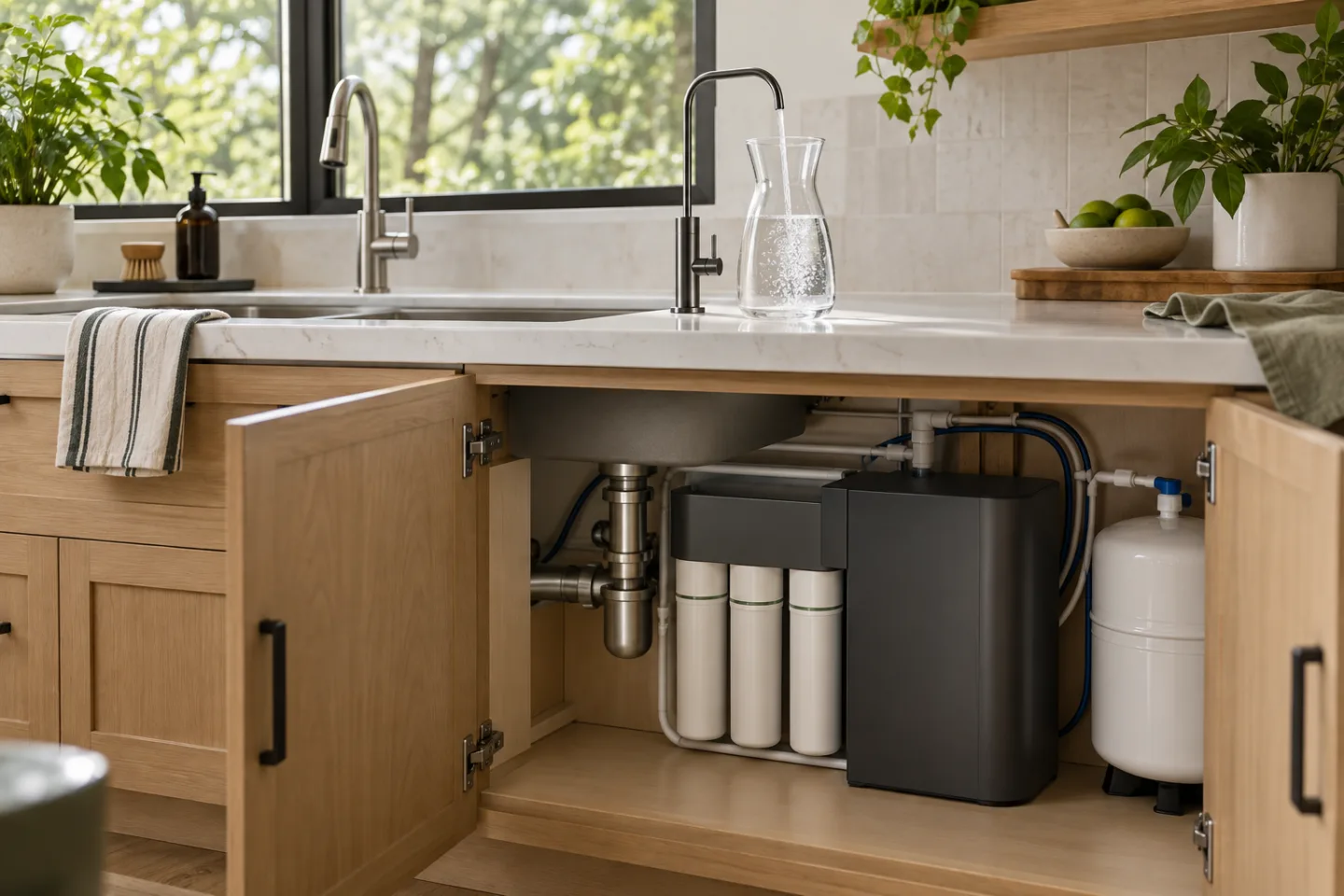
Our recommendation
Choose Waterdrop G3P800 when exact-model IAPMO certification, a 3:1 pure-to-drain ratio and its integrated UV stage are the priorities. Choose Frizzlife PD800-TAM4 when you specifically want its separate alkaline remineralization stage and its smaller main RO cabinet fits better. Both need power, a drain and a dedicated faucet; neither is designed as a direct private-well treatment system.
| If this sounds like you | Best next move | What decides it |
|---|---|---|
| Strongest current certification case | Waterdrop G3P800 | IAPMO lists claims under NSF/ANSI 42, 53, 58 and 372 on the current product page. |
| Alkaline remineralization included | Frizzlife PD800-TAM4 | A separate TAM4 stage adds minerals after RO. |
| Better published drain ratio | Waterdrop G3P800 | 3:1 versus Frizzlife’s stated 2:1. |
| Smallest main RO cabinet | Frizzlife PD800 | The TAM4 housing still needs separate space. |
In this guide
- Waterdrop G3P800 vs Frizzlife PD800: our recommendation
- Key specifications side by side
- Certification and treatment evidence
- Flow: the identical 800 GPD headline hides different experiences
- Drain ratio and water use
- Cabinet fit and installation
- Replacement filters and five-year budget
- Who should choose Waterdrop G3P800?
- Who should choose Frizzlife PD800-TAM4?
- When neither is the right purchase
- Low-pressure homes need a separate check
- What the smart faucet can and cannot tell you
- Noise, electricity and outage behavior
- How to compare the current bundles
- First-week acceptance test
- Questions to ask both sellers
- Final buying checklist
- Frequently asked questions
- Sources & editorial notes
Waterdrop G3P800 vs Frizzlife PD800: our recommendation
For most city-water buyers choosing strictly between these two systems, G3P800 is the easier recommendation because its current exact-model evidence is clearer and its published 3:1 pure-to-drain ratio is better. PD800-TAM4 becomes more attractive when alkaline remineralization is a deliberate requirement and the separate post-filter can be installed cleanly.
Do not choose from 800 GPD alone. Both headline the same nominal production class, so the real decision is evidence, faucet output, drain efficiency, filter availability, cabinet layout and the finished-water preference. We have not installed or laboratory-tested either unit.
Key specifications side by side
Use these figures as a shortlist, then confirm the exact package at checkout. Frizzlife sells PD800 variants, and Waterdrop bundles can add remineralization filters.
| Decision factor | Waterdrop G3P800 | Frizzlife PD800-TAM4 |
|---|---|---|
| Nominal production | 800 GPD | 800 GPD |
| Published faucet flow | Fast-fill examples; verify current sheet | 0.56 GPM |
| Pure-to-drain ratio | 3:1 | 2:1 |
| Main dimensions | 18.06 × 5.65 × 17.75 in | 5.3 × 14.7 × 15.5 in |
| Remineralization | Optional bundle on some listings | Separate TAM4 alkaline stage included |
| Power and drain | Required | Required |
Certification and treatment evidence
Waterdrop states the G3P800 complete system is certified by IAPMO R&T to NSF/ANSI 42, 53 and 58 for claims in its performance sheet and to NSF/ANSI 372 for low lead. That is more useful than a general brand claim because it identifies the complete model and directs the buyer to defined reductions.
Frizzlife lists NSF/ANSI 42, 53, 58 and 372 in its certification explanation and SGS certification. Before purchase, ask for the exact PD800-TAM4 listing or performance document and verify the substance that matters. “Certified materials,” testing to a standard and certified reduction performance are not interchangeable.
Flow: the identical 800 GPD headline hides different experiences
GPD is a membrane production rating, not a promise that every faucet fill will be identical. Frizzlife publishes 0.56 GPM. Waterdrop provides timed fill examples and a smart faucet, but the buyer should use the current performance information rather than converting 800 GPD into an unrealistic continuous faucet rate.
List the largest routine task: a glass, coffee reservoir, kettle or stockpot. If both systems fill it comfortably, extra speed should not decide the purchase. Pressure, temperature, membrane condition and the added remineralization stage can affect actual delivery.
Drain ratio and water use
Waterdrop’s stated 3:1 ratio means three parts purified water for one part concentrate under its test conditions. Frizzlife lists 2:1. For a household producing 600 gallons of RO water a year, the idealized ratios imply about 200 versus 300 gallons sent to drain. Actual results vary with pressure, temperature, feed quality and flushing.
This difference is worth considering, but it is rarely large enough to compensate for choosing the wrong treatment evidence or an impractical installation. Track the ratio only after the system is commissioned if water efficiency materially affects the decision.
Cabinet fit and installation
Waterdrop is narrow but deep and tall. Frizzlife’s main PD800 cabinet is shorter and shallower, while its TAM4 remineralization housing needs its own footprint and cartridge-change clearance. Measure around the disposer, shutoff valves, trap and stored items—not an empty rectangle.
Both need electricity, a drain saddle and a hole for the supplied faucet. Confirm countertop material and permission before opening the package. Use a plumber when valves are corroded, connections are nonstandard or drilling is outside your experience.
Replacement filters and five-year budget
G3P800 currently uses CF, CB and G3P800-N2RO cartridges with stated maximum intervals of roughly six, twelve and twenty-four months. Frizzlife PD800-TAM4 lists ASR211 around twelve months, ASR212-800G around two years and an alkaline FZ-4 or TAM4-related cartridge around twelve months. Water conditions and usage can shorten either schedule.
Build a five-year calendar, not an annual estimate. Record every cartridge due, normal price outside promotions, shipping and whether the first set is included. Check stock before choosing; at the research date, some Frizzlife replacement listings were marked unavailable, which should be resolved with support rather than ignored.
Who should choose Waterdrop G3P800?
Choose it when the current IAPMO-certified claim matches the water concern, the 3:1 ratio matters and the cabinet accepts its 18-inch depth. It is also the clearer choice when the buyer wants one integrated package rather than a separate remineralization housing.
Skip it when the home uses untreated well water, the required claim is absent, the faucet cannot be installed or the three-cartridge maintenance plan is unacceptable. Waterdrop says the model is intended for municipal tap water.
Who should choose Frizzlife PD800-TAM4?
Choose it when alkaline remineralization is genuinely wanted, the main cabinet shape fits better and Frizzlife confirms the exact evidence and replacement supply. Its stated 0.56 GPM and 2:1 drain ratio provide a concrete starting point for comparing daily use.
Skip it when the additional housing complicates the cabinet, replacement stock is uncertain or a certification-first buyer cannot verify the exact complete-system claim. A mineral stage changes taste and finished-water composition; it does not make unsupported health promises valid.
When neither is the right purchase
Choose neither for microbiologically unsafe private-well water without an engineered treatment plan, for a renter who cannot add a drain and faucet, or when a countertop system is the only practical layout. A conventional tank RO may also be easier where electrical access is poor or peak flow matters during outages.
If the concern is only chlorine taste and odor, a simpler certified carbon filter may cost much less and avoid concentrate water. Start from the water result and treatment method rather than assuming RO is automatically necessary.
Low-pressure homes need a separate check
Both systems use an electric booster pump, but that does not mean every low-pressure supply is suitable. Waterdrop publishes a 14.5–87 psi feed range for G3P800. Ask Frizzlife for the current PD800 minimum and maximum, then compare both with pressure measured while other fixtures are running.
A system that powers on at static pressure can still perform poorly when supply pressure falls during peak use. If the home has a private well, pressure swings, sediment or microbiological concerns also require upstream assessment; neither product page presents these systems as a complete untreated-well solution.
What the smart faucet can and cannot tell you
G3P800’s faucet displays TDS and filter-life information. PD800 packages use their own faucet and indicator arrangement depending on the variant. These displays help with appliance status and maintenance reminders, but a TDS number does not identify lead, PFAS, arsenic or bacteria.
Record baseline readings after flushing so an unusual change can prompt investigation. Do not use a reassuring number to extend a cartridge beyond instructions or to replace a laboratory test for a named contaminant. The display is an operating tool, not a complete water-quality test.
Noise, electricity and outage behavior
Tankless RO systems make pump and flushing sounds while operating. Neither official page gives enough context to promise how either unit will sound in a particular cabinet. Ask about published sound data, then consider whether the cabinet shares a wall with a bedroom or work area.
Both require electricity. During an outage, they will not operate normally even if municipal water pressure remains. A household that needs drinking water through outages should keep an appropriate stored supply and understand the restart or flush sequence after power returns.
How to compare the current bundles
Waterdrop may sell G3P800 alone or with mineral, faucet or spare-filter bundles. Frizzlife sells PD800 configurations with TAM4 and replacement combinations. Write every included cartridge and accessory beside the cart total before comparing.
A free spare has value only when it is the correct part, has an appropriate storage life and displaces a future purchase. Do not compare a discounted bundle with a bare system and call the price difference permanent. Save the checkout description because it determines the first five-year replacement calculation.
First-week acceptance test
After installation and the required flush, time a one-quart and one-gallon fill, note pump sound and check every fitting during and after operation. Record the starting faucet indicators and inspect the drain connection. Repeat the leak check later that day and after several days.
If flow is materially below expectations, confirm valves, tubing, feed pressure and installation against the manual before blaming the membrane. Contact the seller within the return window and keep written answers. This startup checks record makes a later warranty conversation far more useful.
Questions to ask both sellers
Ask for the exact current certification listing or performance sheet, minimum dynamic inlet pressure, filter-life calculation method, replacement part numbers, warranty coverage for pump and faucet, and the procedure when a filter is unavailable. Ask whether adding a refrigerator line is supported and whether it changes flow or warranty.
A useful response names the model and document. A generic answer about “nine-stage” filtration or thousands of contaminants should not settle a model-specific decision. Keep the answers with the receipt and recheck them when the first replacement is due.
Final buying checklist
Verify the exact model certification or performance sheet, feed-pressure range, cabinet drawing, faucet-hole requirement, drain connection, filter part numbers and current stock. Price five years on one date and save the documents with the receipt.
Our final choice is G3P800 for the stronger documented evidence and water-efficiency case. PD800-TAM4 is the situational alternative for a buyer who values its separate remineralization stage and confirms ongoing cartridge supply.
Frequently asked questions
Which should I choose in the Waterdrop G3P800 vs Frizzlife PD800 comparison?
Choose Waterdrop G3P800 when exact-model IAPMO certification, a 3:1 pure-to-drain ratio and its integrated UV stage are the priorities. Choose Frizzlife PD800-TAM4 when you specifically want its separate alkaline remineralization stage and its smaller main RO cabinet fits better. Both need power, a drain and a dedicated faucet; neither is designed as a direct private-well treatment system.
What should decide the comparison?
Strongest current certification case: waterdrop g3p800. IAPMO lists claims under NSF/ANSI 42, 53, 58 and 372 on the current product page.
What should I do before ordering?
Confirm the exact reduction claim and cabinet layout, then price every cartridge due during five years.
Put this guide to work
Compare two quotes on the same scope
Use the matching tool, save the result to My Home Water Plan and return when a quote, test result or service date changes.
Open the tool →Open My Water Plan →Get the editable pack →How we checked this guide
We prepared this comparison using current official product, replacement-filter and certification information. We did not install or laboratory-test either system.
- Waterdrop: G3P800 product and performance information
- Frizzlife: PD800-TAM4 product and replacement information
- CDC: About home water treatment systems
Product details can change. Confirm the exact model and current terms before ordering. How we write and update guides.