The short answer
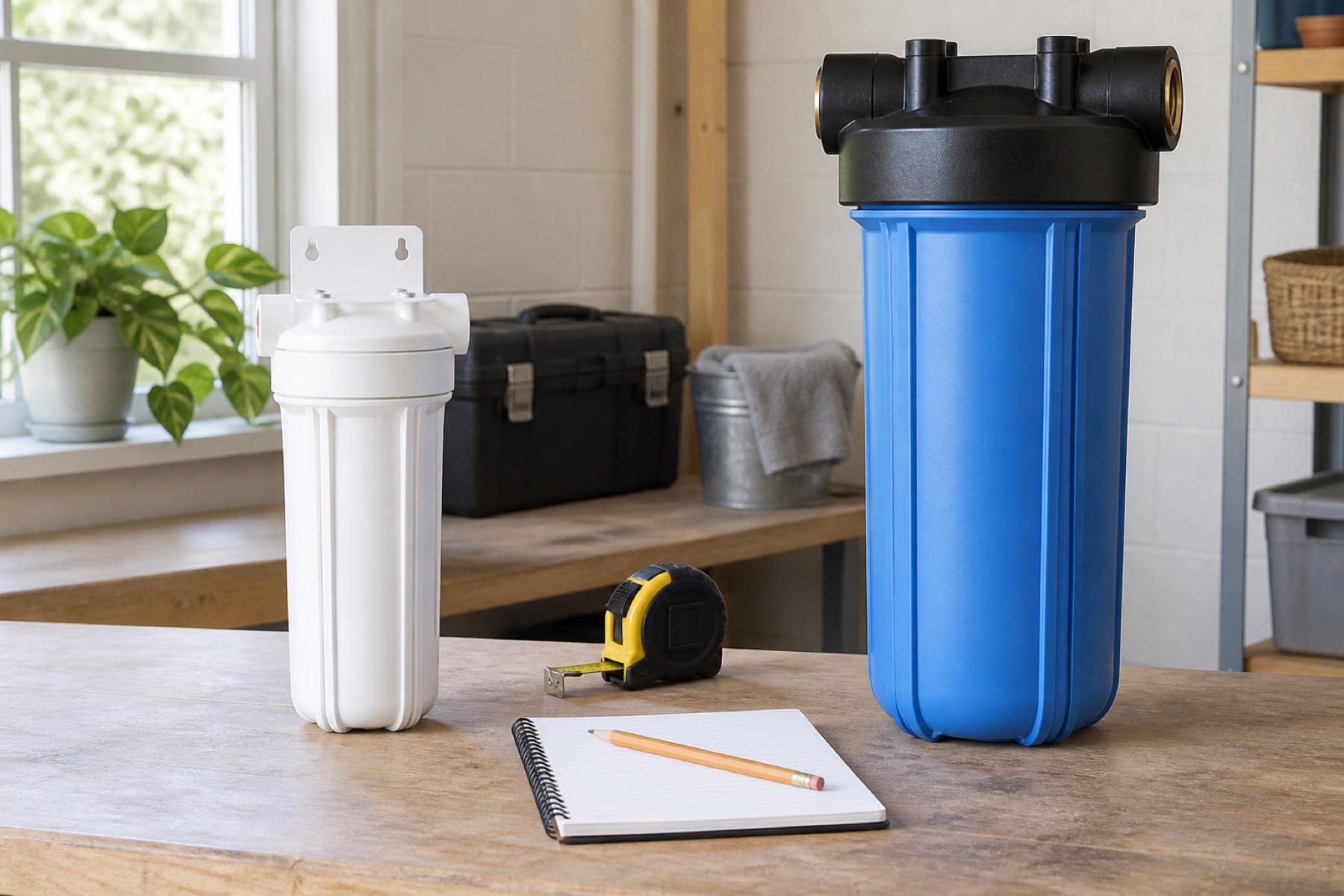
Choose from the water problem, not from a technology ranking. Carbon is often the simpler route for specific taste, odor and certified reduction goals. Reverse osmosis can address a different and often broader set of dissolved substances at one tap, but adds a membrane, drain water, storage or high-flow hardware, and more maintenance. The exact model’s certified claims decide whether either fits.
| Your situation | A sensible next step | Keep in mind |
|---|---|---|
| Taste or disinfectant goal with a matching claim | Compare certified carbon systems | Confirm capacity and flow for the chosen location. |
| A dissolved contaminant with a matching RO claim | Compare point-of-use RO systems | Include drain, power, tank and membrane upkeep. |
| No defined water problem | Review the report first | Technology names do not establish a need. |
In this guide
Begin with one sentence about your water
Write: “I want to reduce ___ in water used for ___.” That blank may be chlorine taste at the kitchen tap, lead identified in a result, or a dissolved solid for which an exact RO model has a verified claim. If you cannot fill it in, a product comparison is premature.
CDC advises matching treatment to the contaminants in the water. Carbon and RO are categories containing very different products. A countertop carbon pitcher, a direct-connect cartridge and a whole-house catalytic-carbon tank should not be treated as one performance level.
Where carbon filtration is usually the cleaner fit
Carbon filters can be a sensible choice when the exact model has a relevant reduction claim and the buyer values simpler plumbing and less wastewater. At one tap, the setup may be compact. On a main line, a properly sized tank can address a house-wide aesthetic goal while preserving useful flow.
Do not assume “activated carbon” removes every chemical, metal or microorganism. Capacity and performance are tested under stated conditions, and a filter can lose effectiveness before a calendar reminder if its applicable capacity is reached. Read the model’s data sheet, not a retailer’s category description.
Where reverse osmosis earns the extra complexity
RO uses a membrane and pressure to separate water from certain dissolved substances. It is commonly installed at a drinking-water point rather than used as an automatic whole-house upgrade. The model may include sediment and carbon prefilters, a storage tank or tankless pump, a postfilter and sometimes remineralization.
That added treatment path can make sense when the exact certified claim matches the result that matters. It also creates more ownership questions: reject-water routing, feed pressure, membrane and cartridge costs, storage-tank space, electrical power for many tankless models, and a slower or different delivery experience.
Compare claims without getting lost in logos
Use the certification body’s public listing or the performance data sheet to verify the exact model and reduction claim. NSF/ANSI 42 generally covers aesthetic effects, while standards such as 53 and 58 address different health-effect and RO claims. A standard number alone is not a list of everything the model reduces.
Record the model suffix, claimed substance, rated capacity, test conditions and replacement trigger. If a seller changes the model name between the page, cart and document, stop and resolve it. Similar housings do not establish the same certified performance.
| Check | Carbon candidate | RO candidate |
|---|---|---|
| Exact reduction claim | Specific model and substance | Specific model and substance |
| Installation | Connection and service clearance | Drain, pressure, tank/pump and power |
| Consumables | Cartridge or media schedule | Prefilters, membrane and postfilter |
| Water use | Normal treated-flow implications | Published recovery or waste ratio |
| Failure signal | Replacement trigger and bypass plan | Change in production, quality or monitoring alert |
The ownership-cost comparison most pages omit
Price both systems over the same five years. Include the complete first kit, installation, every specified replacement part, shipping, tax, optional service and any electricity. For RO, ask about the membrane separately from the annual filters and include any proprietary replacement bundle.
Do not value untreated reject water at zero simply because it is not a line item on the product page. Ask for the current recovery or waste information under relevant conditions. At the same time, do not declare all RO wasteful from an old generic ratio; compare the documented exact models.
Our decision rule
Choose a suitable carbon model when it directly addresses the goal and you prefer the simpler system. Choose a suitable RO model when its verified claim addresses an important dissolved-substance concern and you accept the installation and upkeep. Some RO systems already contain carbon stages, but that does not make the technologies interchangeable.
Skip both when the cause is unknown, the water may be microbiologically unsafe, or the proposed claim cannot be verified. The confident purchase is not “RO is strongest” or “carbon is natural.” It is an exact model doing a defined job in a location you can maintain.
Put this guide to work
Compare the complete ownership cost
Use the free tool, then download a record you can keep. No email required.
Open the tool →Get the editable pack →Sources & editorial notes
This is a technology and buying-fit comparison based on public-health guidance and certification explanations, not a product performance test.
- CDC: About home water treatment systems
- NSF: Water filter contaminant reduction claims guide
Product details can change. Confirm the exact model and current terms before ordering. How we write and update guides.