 tap
tap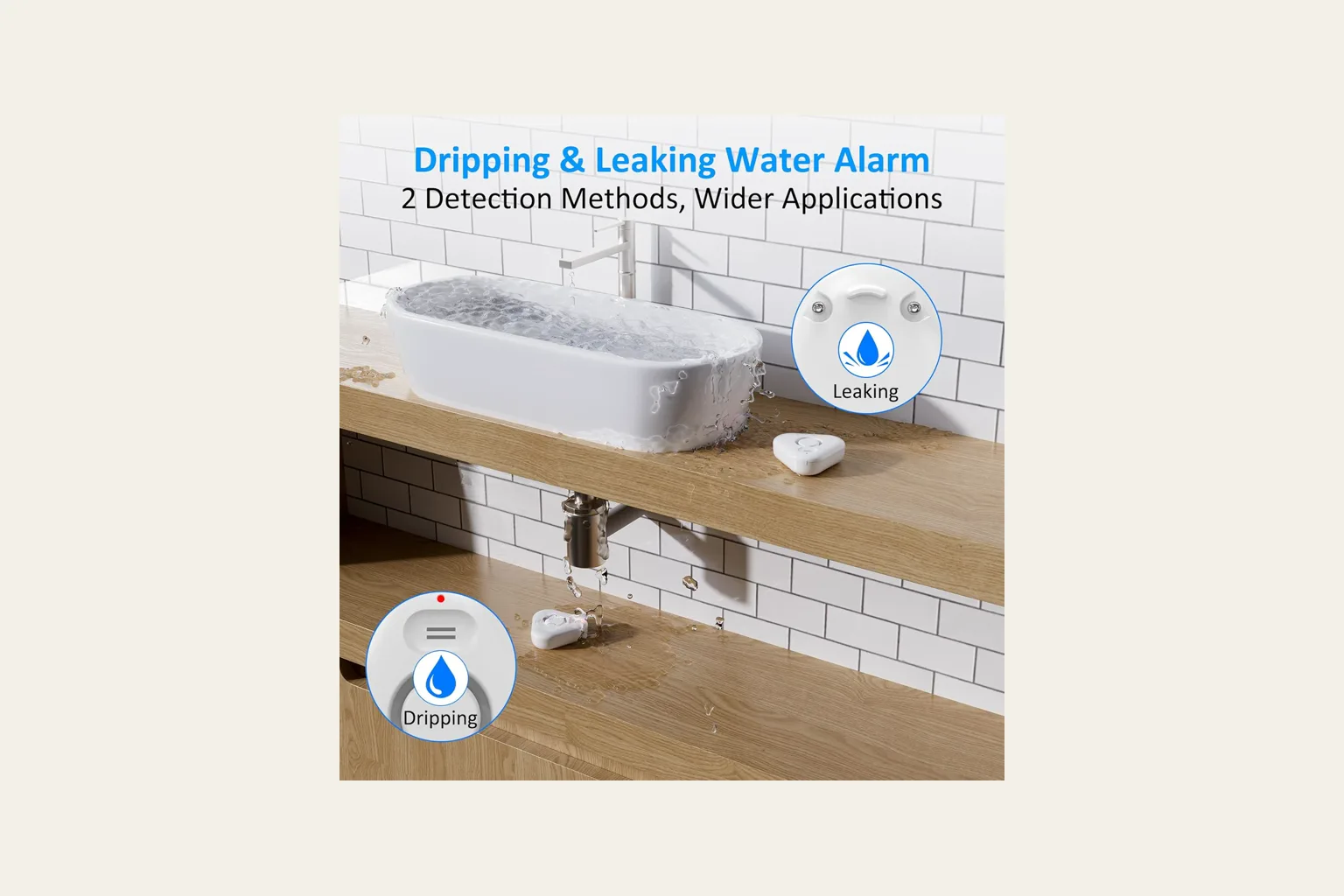
Our recommendation
The $29.95 HyLine Water Leak Alarm is a sensible basic option for a specific risk point when someone is close enough to hear it. Its top drip sensor, bottom flood probes and adjustable local alarm are useful on paper, but the product page does not publish a decibel figure. It provides detection, not remote alerts or automatic shutoff.
The decision at a glance
Place, hear and respond
Place
- Follow likely water path→
- Keep probes at risk point
Hear
- Choose volume→
- Test through closed doors
Respond
- Reach the source→
- Shut water off safely
| If this sounds like you | Best next move | What decides it |
|---|---|---|
| Occupied home and one clear risk point | Shortlist the alarm | Test audibility and sensor placement. |
| Property is often empty | Choose a smart alert or shutoff plan | A local alarm may go unheard. |
| You need broad room coverage | Map more than one sensor | Water only triggers the device it reaches. |
In this guide
- HyLine Water Leak Alarm: our verdict
- Where a local alarm works best
- Drip sensor versus flood probes
- Battery and sound maintenance
- When the smart detector is worth more
- Limits to accept before buying
- Four volume levels need a measurable result
- IP66 is not permission to submerge the alarm
- How many alarms a home may need
- Compare with well-documented alternatives
- Frequently asked questions
- Sources & editorial notes
HyLine Water Leak Alarm: our verdict
The simple design is the appeal. Batteries are included, four alarm levels are listed, and the device claims bottom probes for floor water plus a top sensor for drips. HyLine lists IP66 protection and up to three years of battery life with a low-battery warning.
The missing decibel figure makes it difficult to compare loudness. Buy one and test it according to the manual before assuming it can be heard from another floor or behind a closed utility-room door.
Where a local alarm works best
Use it at a location where water is likely to reach the probes and where a person can hear the alert: beneath a sink, beside a water heater, behind a washing machine or near another known connection. Keep the placement from interfering with the appliance or creating a trip hazard.
A device on a high shelf cannot detect water on the floor. A device placed across the room may miss a small leak that travels in another direction.
Drip sensor versus flood probes
The top and bottom detection points could help with different water paths, but placement still controls performance. Ask for the manual’s diagrams and test both modes after setup.
Do not pour water around electrical equipment for an improvised test. Follow the maker’s test method and dry the unit as directed.
Battery and sound maintenance
“Up to three years” is not a replace-by date. Temperature, alarm events and battery condition can change service life. Record the battery type, installation date and test schedule. Replace batteries when the manual or warning requires.
Use the lowest volume only if it remains audible where people spend time. Test with doors closed and normal household noise present.
When the smart detector is worth more
Spend more when phone notification lets someone respond while the property is empty. The smart detector may also be easier to monitor across multiple locations, depending on the app and account features HyLine confirms.
Keep the local alarm when network independence, low price and an occupied property matter more.
Limits to accept before buying
The alarm does not close a valve, stop the leak or protect against every water source. It covers the place where water reaches it. Pair it with a response plan and the correct number of sensors rather than a vague expectation of whole-home protection.
Four volume levels need a measurable result
Adjustable volume helps in different rooms, but the setting should be chosen from an audibility test. Place the alarm, close doors, turn on normal background equipment and confirm that someone in the occupied area recognizes the sound.
Ask HyLine for the decibel rating and test distance in the current manual. Without that figure, comparisons with named loud-alarm products remain uncertain.
IP66 is not permission to submerge the alarm
An IP66 claim generally describes protection from dust and powerful water jets, not indefinite immersion. Follow the product’s current cleaning and placement instructions and do not deliberately submerge it to test waterproofing.
If a flood covers the device, treat it according to the manual before reusing it. Water resistance protects a detector during its job; it does not make every battery compartment or damaged seal permanently watertight.
How many alarms a home may need
List water heaters, washing machines, dishwashers, sinks, refrigerators with water lines, toilets, sump areas and other supply connections. Then prioritize points where a small leak is likely to travel to the sensor.
The $29.95 unit price can support broader coverage than the smart model, but every additional alarm needs testing and batteries. Coverage that cannot be maintained is not complete protection.
Compare with well-documented alternatives
Before buying several units, compare published sound level, sensor cable options, battery availability, test controls and warranty with established leak alarms at similar prices. A basic alarm is a simple product, so missing specifications are a valid reason to keep shopping.
HyLine may still be convenient for a buyer already ordering the ionizer. Convenience should not replace an audibility and placement check.
Frequently asked questions
Is the HyLine Water Leak Alarm worth considering?
The $29.95 HyLine Water Leak Alarm is a sensible basic option for a specific risk point when someone is close enough to hear it. Its top drip sensor, bottom flood probes and adjustable local alarm are useful on paper, but the product page does not publish a decibel figure. It provides detection, not remote alerts or automatic shutoff.
Who is the HyLine Water Leak Alarm best for?
Occupied home and one clear risk point. Shortlist the alarm. Test audibility and sensor placement.
What should I check before buying the HyLine Water Leak Alarm?
Place one sensor at the highest-priority water path and verify that the alarm is clearly audible from the rooms that matter.
Put this guide to work
Make a leak-protection purchasing brief
Use the free tool, then download a record you can keep. No email required.
Open the tool →Get the editable pack →Sources & editorial notes
Research-only review based on HyLine’s current product page. We did not test sound level, waterproofing or battery life.
- HyLine: water leak alarm specifications
- HyLine: limited warranty terms
- HyLine: returns and refunds policy
Product details can change. Confirm the exact model and current terms before ordering. How we write and update guides.