The short answer
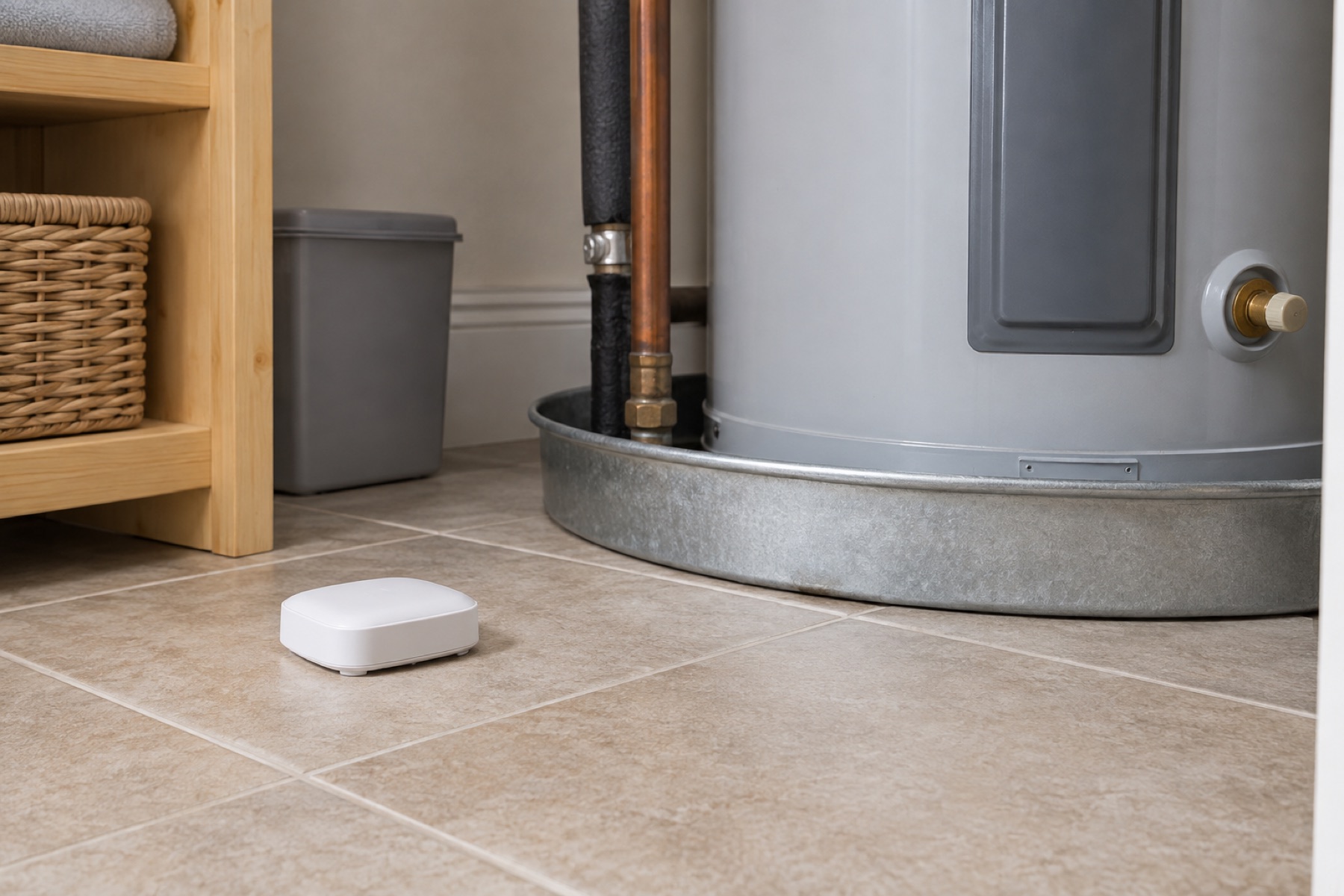
A standalone leak detector can alert you when its sensor detects water. An automatic shutoff system can close a water valve under its configured conditions. Check the exact model’s behavior and compatibility; neither protects against every source of water damage.
The decision at a glance
An alert and an action are different jobs
Alert-only sensor
- Water reaches sensor→
- Supported alarm or notification→
- A person must respond
Automatic shutoff
- Supported condition detected→
- Configured valve action→
- Investigation and recovery
| Your situation | A sensible next step | Keep in mind |
|---|---|---|
| You want an alert at a specific spot | Consider a point leak detector | Plan who will respond. |
| You spend long periods away | Assess automatic shutoff options | Confirm installation and offline behavior. |
| Rain or groundwater enters the house | Investigate the building and drainage | Closing the domestic supply won’t address that source. |
In this guide
Work backward from your ability to respond
Picture a leak alert arriving while you are at work or traveling. Who could reach the property, confirm the issue and take action? That answer helps distinguish a useful alarm from a notification with no response plan.
Make a list of the places you want to monitor and the people who can help. Avoid assuming that one sensor watches an entire room or house. Coverage depends on the device and placement.
Check exactly what triggers the action
Moen’s product range includes separate leak detectors and water-monitoring shutoff equipment. That is a useful example of the distinction, not a claim that one brand suits every home.
Ask whether the exact system relies on local sensing, flow analysis, paired devices or a combination. Also ask which actions need internet access, a paid service or a particular setup. Get the current answer for the model you intend to buy.
Budget for installation and ongoing ownership
A complete quote should identify the valve, sensors, installation, any accessories and recurring charges. Ask the installer to confirm that the proposed shutoff location and equipment are suitable for your plumbing.
Include ongoing battery checks, device access and manual operation in your plan. The right product is one you can keep working, not simply one with more alert types.
- Which water sources are covered and excluded?
- What happens during an internet or power outage?
- Can the valve be operated manually?
- Who receives alerts and how is the setup tested?
Keep building water separate from supply leaks
A water-supply shutoff does not prevent rain or groundwater entering a building. If the concern is basement flooding, pair the discussion with an assessment of that source.
Our advice is to mark each worry on a simple list: supply plumbing, appliance connection, rain entry or groundwater. Ask the provider which entries its proposal addresses and which remain open.
Decide whether the added automation is worth it
For a small, accessible area where someone can respond quickly, an alert may be a reasonable starting point. For an often-empty property, ask an installer about the case for automatic action.
Don’t assume an insurance discount. If that benefit affects your budget, ask your insurer which equipment and installation conditions it recognizes before purchasing.
Work through an away-from-home scenario
Suppose you are away for a week and receive a water alert. Walk through the response with the people who could help: who sees it, who confirms it and who can take action. This is a planning exercise, not a claim that a particular device will catch every leak.
Ask for an installer-led demonstration of the chosen system’s supported test procedure. Do not create a real leak to test protection. Keep the manual and support contact accessible to the household.
| Stage | A question to resolve | Evidence to keep |
|---|---|---|
| Detection | Which areas or water flow does this model monitor? | Sensor locations and manufacturer limitations |
| Notification | Who receives an alert and what needs internet? | Account access and documented offline behavior |
| Action | Can the system shut off water under these conditions? | Installer-confirmed compatibility and settings |
| Recovery | Who checks the property and restores operation safely? | Service contact and manufacturer instructions |
Put this guide to work
Make a leak-protection purchasing brief
Use the free tool, then download a record you can keep. No email required.
Open the tool →Get the editable pack →Sources & editorial notes
This guide combines published information with our suggested decision process. It does not report hands-on product testing or an assessment of your property.
- Moen: Smart water security product documentation
Product details can change. Confirm the exact model and current terms before ordering. How we write and update guides.