 tap
tap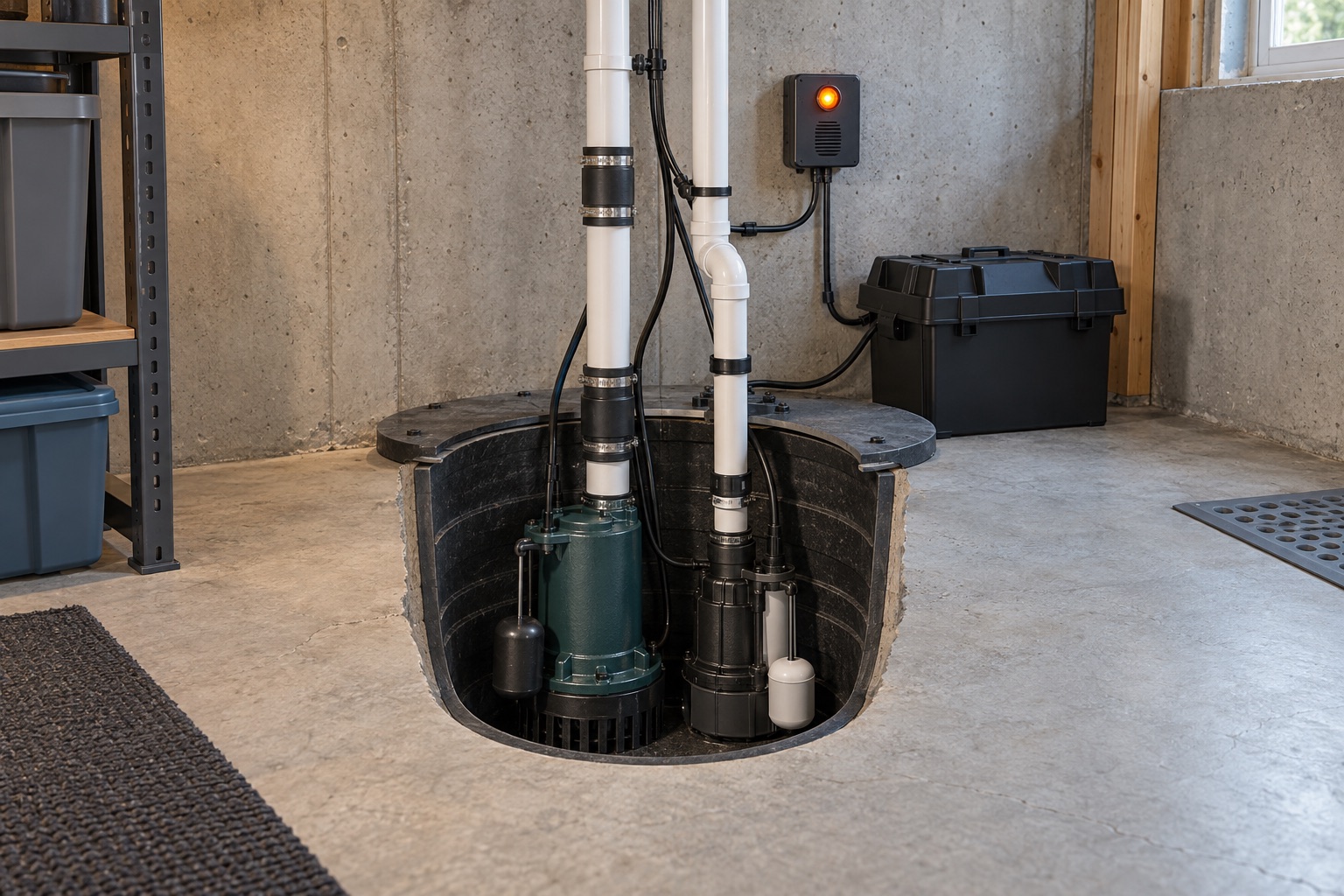
Our recommendation
Choose a battery backup when you need a dedicated secondary pump and your installer can match its output at the real discharge head, maintain the battery and verify alarms. Consider a water-powered backup only with reliable municipal water pressure, local approval, proper backflow protection and acceptable water use. A water-powered unit is generally not an option for a private well because the well pump also loses power.
| If this sounds like you | Best next move | What decides it |
|---|---|---|
| Private well supplies the home | Use a suitable battery or generator plan | A water-powered backup loses its pressure source. |
| Reliable municipal supply; long outages | Assess water-powered backup | Pressure, code and water use decide fit. |
| Short outages; monitoring matters | Assess a self-testing battery system | Verify runtime at actual head and duty cycle. |
In this guide
- Quick comparison
- Compare pumping at your head
- Battery runtime is conditional
- Water-powered requirements
- Alarms and self-testing
- Installation scope
- Who should choose battery backup?
- Who should choose water-powered backup?
- Battery Backup vs Water-Powered Sump Pump: the bottom line
- Frequently asked questions
- Sources & editorial notes
Quick comparison
Battery systems store electrical energy and run a separate DC pump. Water-powered pumps use municipal pressure to move sump water without electricity. Both need a correctly installed primary pump, independent activation and a discharge path.
Neither type guarantees a dry basement. Inflow can exceed capacity, components can fail and flooding can come from sources outside the sump.
| Decision | Battery backup | Water-powered backup |
|---|---|---|
| Energy source | Maintained battery | Municipal water pressure |
| Outage duration | Limited by charge and cycling | Not battery-limited |
| Private-well fit | Possible with proper design | Usually unsuitable during outage |
| Routine care | Battery, charger, switches | Valves, backflow, water supply |
Compare pumping at your head
Ask for the performance curve at vertical lift plus friction losses, not the pump’s maximum flow. Zoeller says proper selection requires system load, pipe, lift, horizontal run, fittings and back pressure.
The backup should be evaluated against measured or conservatively assessed basin inflow. A smaller emergency pump may not keep up with the event that also caused the outage.
Battery runtime is conditional
Manufacturer runtime figures depend on battery size, charge, head and whether the pump runs continuously or intermittently. Zoeller’s published examples range from roughly five to seven hours of continuous operation for specific systems and conditions, with longer clock time at a low duty cycle.
Do not transfer one model’s runtime to another. Request the approved battery type and capacity, runtime at your discharge head, recharge time and replacement/testing schedule.
Water-powered requirements
Zoeller’s 540 Flex specifies municipal water pressure of 40–80 PSI and says it can remove up to two gallons of sump water per gallon of city water used under stated conditions. Actual performance follows its curve.
The installation may require a dedicated supply, approved backflow prevention and compliance with local plumbing or water-conservation rules. Ask the water utility and code official before purchase.
Alarms and self-testing
A backup that silently loses readiness is weak protection. Compare high-water, pump, power, battery and switch alerts and what remains local when internet service is down.
Use the manufacturer-supported test procedure and record the result. Ready.gov recommends considering battery backup for sump protection, but maintenance and source control remain necessary.
Installation scope
Ask whether the proposal includes a separate check valve, discharge connection, float placement, charger circuit, battery box, backflow assembly, alarm and commissioning. Confirm whether the primary and backup share a line and how simultaneous operation affects it.
Electrical work and water supply changes should follow local rules. Keep the instructions at the installation.
Who should choose battery backup?
Battery backup is usually the practical choice for a private-well home or where a water-powered pump is not approved. It also fits buyers who value controller diagnostics and accept battery replacement.
Choose it from a performance curve and maintenance plan, not a generic “days of backup” label.
Who should choose water-powered backup?
It can suit a municipal-water home with reliable pressure, long outage concern, adequate utility supply and an approved installation. It avoids battery degradation but consumes treated water while operating.
It is not free energy and it does not remove the need for an alarm, primary-pump care or property drainage work.
Battery Backup vs Water-Powered Sump Pump: the bottom line
The decision turns on available energy, water source, real pumping head and maintenance. Get both proposals expressed as gallons per minute at your head, with every required part and a documented test plan.
Frequently asked questions
Which should I choose in the Battery Backup vs Water-Powered Sump Pump comparison?
Choose a battery backup when you need a dedicated secondary pump and your installer can match its output at the real discharge head, maintain the battery and verify alarms. Consider a water-powered backup only with reliable municipal water pressure, local approval, proper backflow protection and acceptable water use. A water-powered unit is generally not an option for a private well because the well pump also loses power.
What should decide the comparison?
Private well supplies the home: use a suitable battery or generator plan. A water-powered backup loses its pressure source.
What should I do before ordering?
Measure the discharge layout and identify the water source, then request performance at your calculated head and a complete installation scope.
Put this guide to work
Check what each professional quote includes
Use the free tool, then download a record you can keep. No email required.
Open the tool →Get the editable pack →Sources & editorial notes
Research-only comparison based on current manufacturer technical information and public preparedness guidance. It is not a flood guarantee or installation design.
- Zoeller: pump sizing and backup-system support
- Zoeller: AquaNot Key battery backup specifications
- Zoeller: 540 Flex water-powered backup specifications
- Ready.gov: flood preparation and battery-backed sump pumps
Product details can change. Confirm the exact model and current terms before ordering. How we write and update guides.