The short answer
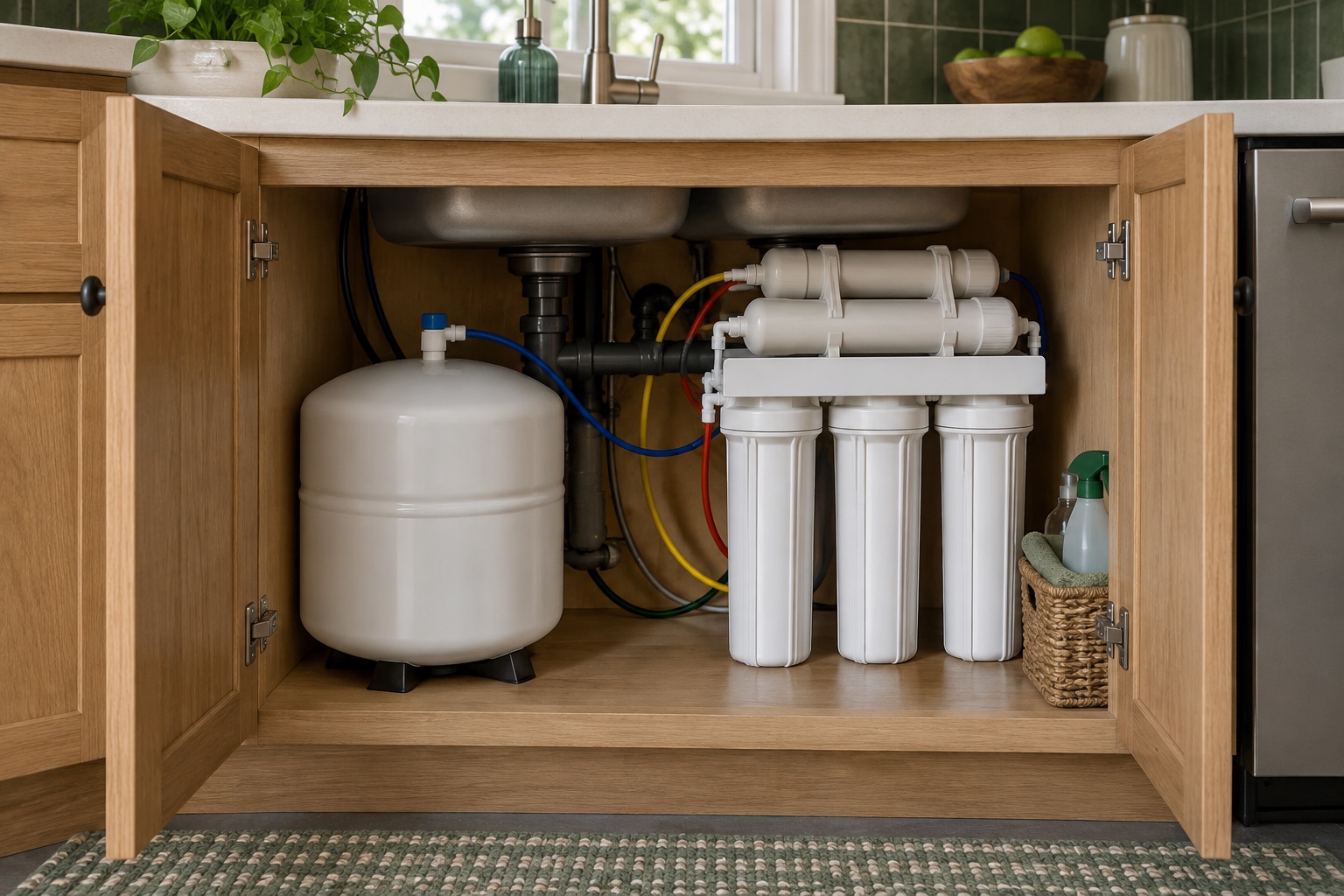
The APEC ROES-50 suits shoppers who prefer a conventional storage-tank RO system and are comfortable with more plumbing parts and staged filter changes. It is less attractive when cabinet space is tight, supply pressure is weak or faster continuous delivery is the priority.
| Your situation | A sensible next step | Keep in mind |
|---|---|---|
| You prefer a conventional tank design | Keep ROES-50 on the list | Measure for the tank and filter assembly. |
| Cabinet space is limited | Compare tankless alternatives | Do not rely on box dimensions alone. |
| You need a specific contaminant claim | Verify the exact model documentation | A five-stage label is not a performance claim. |
In this guide
Our verdict
ROES-50 is the conventional choice in this cluster: separate prefilters, membrane, postfilter and a pressurized storage tank. That familiar architecture can appeal to buyers who value widely understood service steps over electronics and a high headline flow rate.
It is not automatically the budget winner. Installation space, replacement kits, membrane timing and reject water belong in the same comparison as the purchase price. We assessed published information; we did not conduct hands-on or laboratory testing.
What the tank changes
The tank stores treated water so the faucet can draw from a reserve. That means the everyday experience depends on usable tank volume and refill behavior, not just the membrane’s production rating.
Make a cardboard footprint for the tank and filter assembly. Leave room to change housings and operate the shutoff. A system that technically fits but cannot be serviced without emptying the cabinet is a poor installation.
Maintenance is a set, not one cartridge
Ask for the current manual and list every consumable by part number. Conventional RO typically changes prefilters and postfilters more often than the membrane, but the exact schedule and water conditions control the real timing.
Price a complete first-five-year schedule using current replacement kits. Include a possible service call if you will not change filters yourself.
Pressure deserves an early check
RO performance depends on feed pressure. If pressure is low or variable, do not assume the tank will hide the issue. Ask the seller for the operating range and have the supply assessed before buying a booster or a different system.
A homeowner on a well should discuss pressure cycling and pretreatment needs with a qualified professional. RO is not a substitute for diagnosing a supply problem.
When ROES-50 is easier to justify
It is easier to justify when you have a defined point-of-use treatment need, enough cabinet volume, a suitable drain and faucet location, and a preference for a non-smart appliance. Its conventional layout may also be easier for a local technician familiar with standard RO components.
Compare the exact reduction documentation with your water report. Do not award points simply for the number of stages.
What to ask before buying
Confirm what arrives in the box, whether a faucet opening is required, the tank dimensions, tubing clearances, warranty terms and who handles damaged shipments. Ask whether the quoted installer will commission the system and show you how to isolate it.
- Complete installed price
- Actual service clearances
- Supply-pressure requirement
- Replacement kit and membrane numbers
- Expected reject-water information
Bottom line
Buy ROES-50 when a conventional tank system matches your treatment goal and fits comfortably. Choose a tankless alternative when cabinet geometry, faster sustained delivery or simpler cartridge access matters enough to justify its higher equipment and power requirements.
The useful decision is not old technology versus new technology. It is which complete installation you can afford and maintain.
Products mentioned
We add a buying link only when an approved retailer or affiliate option is available. Always confirm the exact model, current price and availability.
APEC ROES-50
Confirm current package contents, operating requirements and replacement-kit numbers.
View buying options on Amazon ↗Put this guide to work
Compare the complete ownership cost
Use the free tool, then download a record you can keep. No email required.
Open the tool →Get the editable pack →Sources & editorial notes
This guide combines published information with our suggested decision process. It does not report hands-on product testing or an assessment of your property.
- APEC Water Systems: ROES-50 reverse osmosis system
- EPA WaterSense: point-of-use reverse osmosis systems
Product details can change. Confirm the exact model and current terms before ordering. How we write and update guides.