 tap
tap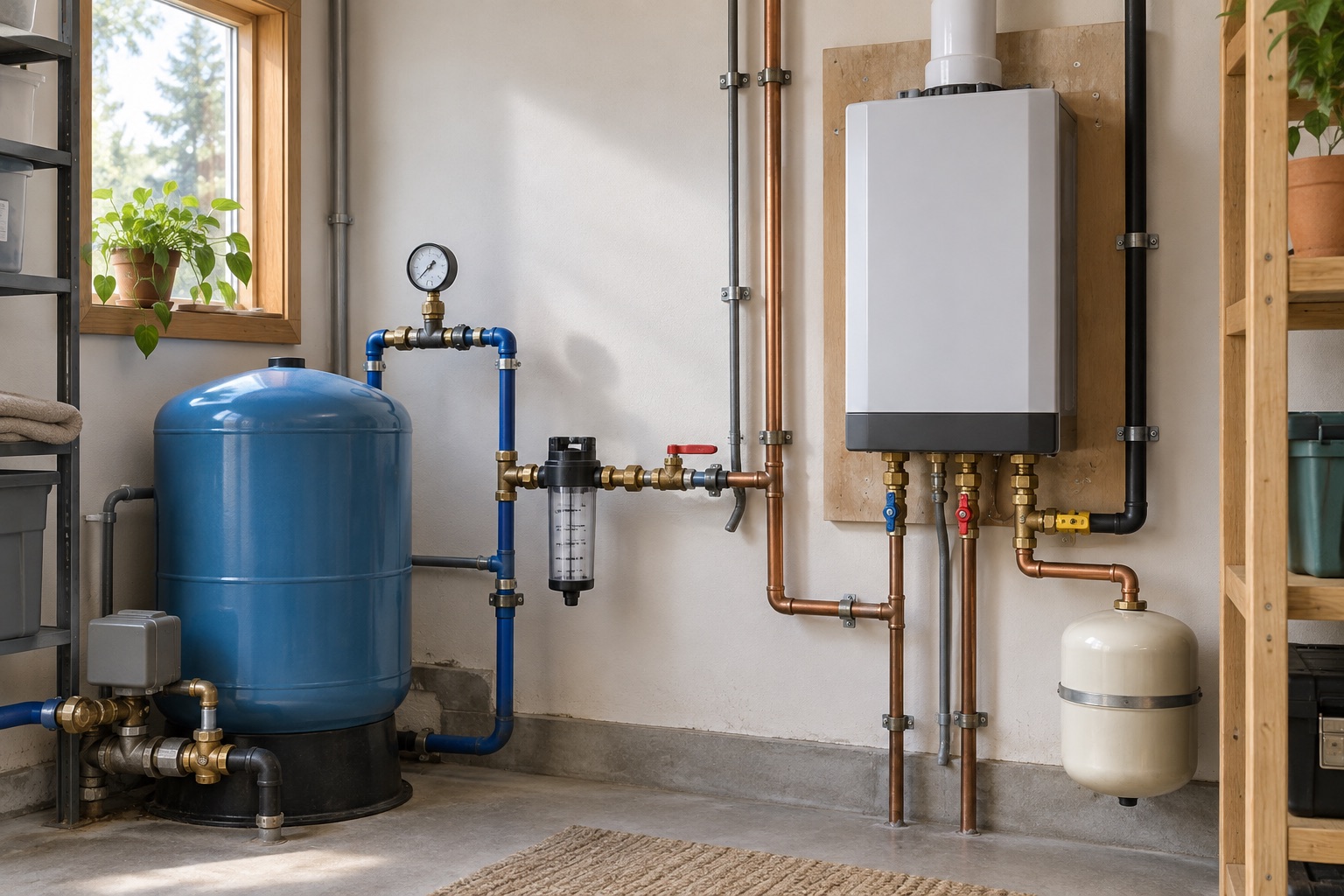
Our recommendation
Size a tankless water heater from the coldest expected inlet temperature and the maximum simultaneous hot-water flow. Then verify the unit’s manufacturer flow table at that temperature rise. In a private-well home, also confirm the pressure system can hold the heater’s minimum flow and pressure and that hardness, iron or sediment will not cause avoidable fouling.
| If this sounds like you | Best next move | What decides it |
|---|---|---|
| One shower at a time | Calculate that fixture’s flow and winter rise | Use the model table at the required rise. |
| Two showers or appliances overlap | Add realistic simultaneous hot flow | Do not use the maximum-GPM headline. |
| Pressure swings or hard well water | Address supply and treatment first | The heater cannot fix a well-system problem. |
In this guide
- Use temperature rise and flow together
- Measure the coldest inlet condition
- Add simultaneous hot-water flow
- Private-well pressure can affect activation
- Water quality changes maintenance
- Fuel, venting and electrical capacity
- A sizing worksheet
- Who should consider tankless?
- Who should pause?
- Tankless Water Heater Sizing for a Private-Well Home: the bottom line
- Sources & editorial notes
Use temperature rise and flow together
The Department of Energy sizing guide says to determine maximum temperature rise from incoming water to desired output, then combine the flow of fixtures likely to run together. The model must provide that flow at that rise.
A unit advertised at a high GPM may deliver less in a cold climate because it must add more heat to every gallon.
Measure the coldest inlet condition
Use the lowest relevant incoming-water temperature, not a comfortable annual average. Ask the utility, measure appropriately or use local design guidance. Select the intended hot-water setpoint with the installer.
Temperature rise equals desired output minus inlet temperature. For example, 120°F output from 50°F water is a 70°F rise. The example does not select a heater; use the manufacturer’s current table.
Add simultaneous hot-water flow
Record fixture flow rather than assuming every shower is 2.5 GPM. Determine which uses realistically overlap and how much of each fixture flow is hot water at the chosen temperatures.
A conservative design may include two simultaneous showers; a smaller household may accept sequencing. Make that lifestyle tradeoff explicit.
Private-well pressure can affect activation
Tankless heaters have minimum activation flow and operating-pressure requirements. A well pressure switch that cycles across a broad range, a clogged filter or undersized pipe can affect the experience.
Ask the heater manufacturer and well professional to confirm the lowest pressure at the heater while other fixtures run. Do not add a constant-pressure system solely to accommodate a heater without comparing alternatives.
Water quality changes maintenance
Hardness can create scale in a heat exchanger; iron and sediment can add fouling. Follow the exact manufacturer’s water-quality limits and maintenance instructions. Test private-well water rather than inferring from stains.
Include isolation valves and service access in the installation quote so flushing or descaling can be completed as required. Treatment equipment must itself be sized for peak flow and pressure loss.
Fuel, venting and electrical capacity
Gas systems may need gas-line, venting, combustion-air and condensate work. Electric tankless units can require substantial electrical capacity. These are contractor and code decisions.
Ask for a complete load and installation assessment before ordering. A discounted heater can become an expensive project when supply upgrades are omitted.
A sizing worksheet
Complete one row for each simultaneous-use scenario, then use the highest flow and required rise to check exact model tables.
| Input | Your number | Source |
|---|---|---|
| Coldest inlet temperature | ___ °F | Measurement or local design data |
| Desired delivery temperature | ___ °F | Installer / household plan |
| Required rise | Output minus inlet | Calculated |
| Simultaneous hot-water flow | ___ GPM | Measured fixtures / plan |
| Available pressure at heater | ___ PSI under flow | Well professional measurement |
Who should consider tankless?
Tankless can suit a household that values long draws, floor-space savings and a correctly sized on-demand system. It performs best when fuel or electrical capacity, well pressure and water quality are all compatible.
Compare total installation and maintenance with a storage heater, heat-pump water heater or staged usage.
Who should pause?
Pause when the quote uses only household size or the heater’s maximum GPM, when winter inlet temperature is missing, or when private-well pressure and hardness are ignored.
A heater that can make endless hot water at one fixture may still disappoint when several fixtures overlap.
Tankless Water Heater Sizing for a Private-Well Home: the bottom line
The model is correctly sized only when its published flow at the required rise meets your simultaneous demand and the private-well system can supply it within pressure and water-quality limits.
Put this guide to work
Keep your equipment and service dates together
Use the free tool, then download a record you can keep. No email required.
Open the tool →Get the editable pack →Sources & editorial notes
Independent sizing framework using Department of Energy guidance and private-well context. It does not select a heater or approve an installation.
- U.S. Department of Energy: tankless water-heater sizing guide
- DOE Building Science Education: gas tankless water heaters
- EPA: private-well testing and treatment context
Product details can change. Confirm the exact model and current terms before ordering. How we write and update guides.