 tap
tap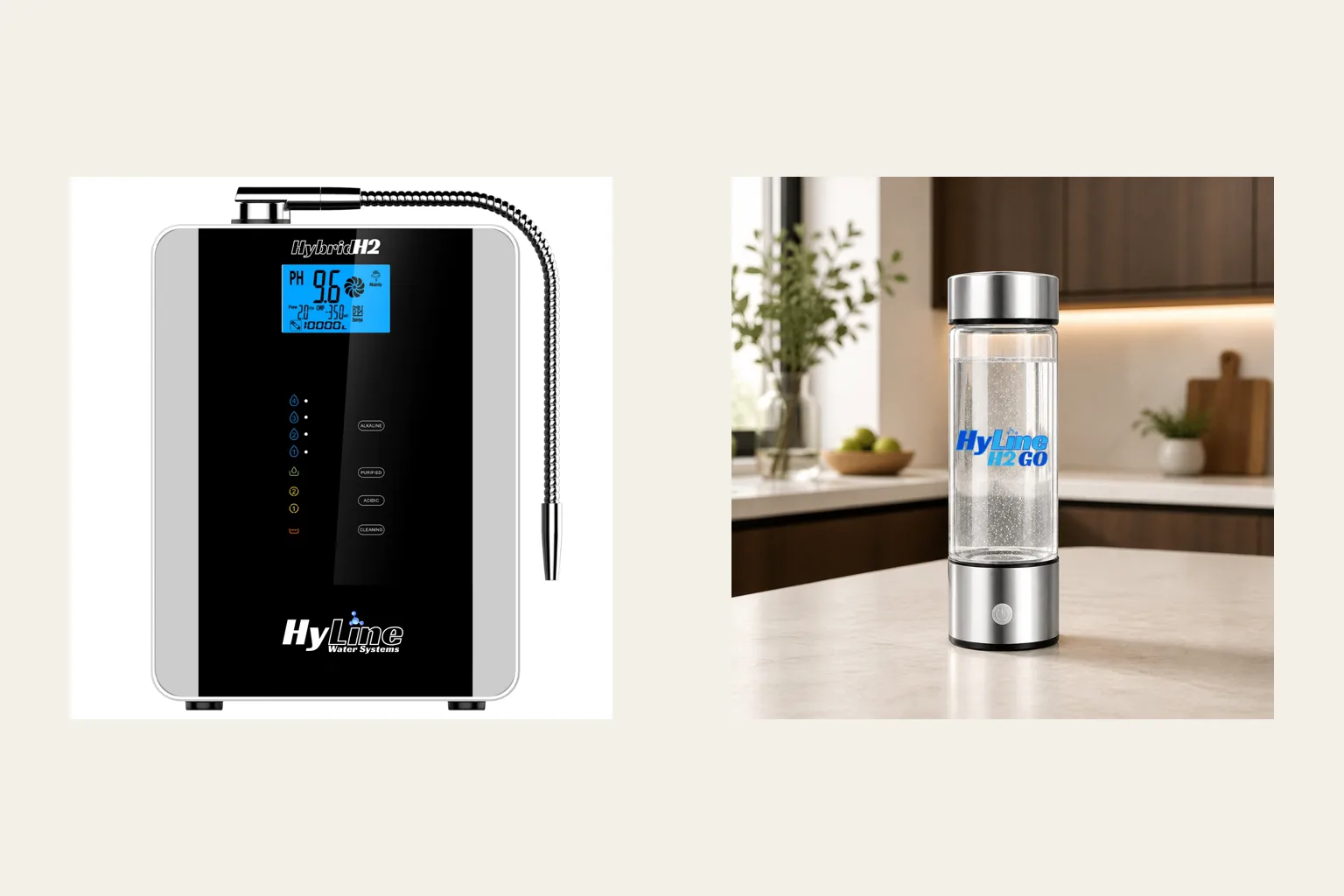
Our recommendation
Choose the H2 GO when you want a portable 420 mL bottle and are comfortable running a three-minute cycle for each serving. Choose the Hybrid H2 when several people want on-demand kitchen output, selectable water types and an integrated filter—and when the $2,695 price and installation make sense. The bottle is not a miniature replacement for the full machine.
The decision at a glance
Choose by the daily job
Hybrid H2
- Connected kitchen appliance→
- Repeated household output→
- Filtration and five water types
H2 GO
- Portable 420 mL bottle→
- One cycle per serving→
- Recharge and clean
| If this sounds like you | Best next move | What decides it |
|---|---|---|
| Portable personal servings | H2 GO | Lower price and no faucet connection. |
| Repeated kitchen use by a household | Hybrid H2 | On-demand output and broader controls. |
| Contaminant reduction is the main job | Assess filtration separately | The technologies and evidence are not interchangeable. |
In this guide
- The short comparison
- Choose around frequency and volume
- Filtration and incoming water
- Installation versus charging
- Who should buy both
- Final decision
- Five-year cost is not remotely close
- Output claims require different questions
- Maintenance moves to a different place
- A sensible upgrade path
- Frequently asked questions
- Sources & editorial notes
The short comparison
The products share the HyLine name and hydrogen positioning, but they solve different routines. H2 GO is a rechargeable 420 mL bottle with a three-minute cycle. Hybrid H2 is a powered kitchen appliance connected to incoming water, with internal filtration, five water types and a separate acidic-water outlet.
The current price gap is $2,595.05. That difference should be justified by household volume, on-demand convenience, selectable output, filtration and support—not by assuming a larger machine guarantees a health result.
| Feature | Hybrid H2 | H2 GO |
|---|---|---|
| Current price | $2,695 | $99.95 |
| Format | Connected countertop ionizer | Rechargeable bottle |
| Output routine | On demand at the sink | 420 mL per 3-minute cycle |
| Filtration | Built-in carbon filter | No filter claim on product page |
| Best fit | Household kitchen use | Portable personal use |
See current HyLine Water Systems options ↗ · See current HyLine Water Systems options ↗
Choose around frequency and volume
One or two bottles a day is an easy H2 GO use case. Repeated servings for a family, cooking and multiple water settings make the main machine more practical. Write down who will use it and how often before comparing the attractive maximum-output numbers.
If the bottle routine becomes annoying, the lower price did not create good value. If the household uses only one small serving, the $2,695 machine may be unnecessary.
Filtration and incoming water
Hybrid H2 includes an internal carbon filter and can be paired with HyLine prefilters. H2 GO should be filled with suitable drinking water and is not presented as a contaminant-removal system. Neither product should be used to make unknown or microbiologically unsafe water safe.
When treatment is the priority, choose a filter from a performance data sheet and exact certification claim first. The ionizer decision comes after that.
Installation versus charging
Hybrid H2 needs a faucet or supply connection, counter or cabinet space, power and a route for acidic water. H2 GO needs filling, charging, cleaning and protection from broken glass. One moves work into installation; the other repeats work with every bottle.
Choose the work you are willing to keep doing. Maintenance that looks simple on day one can decide whether the product is still used six months later.
Who should buy both
Buying both can make sense only when the main machine is used at home and the bottle has a distinct travel or workplace job. Do not add the bottle as a default bundle. Start with one product, prove the routine, then add the second if the use case remains clear.
The H2 GO can also be a lower-cost trial of the fill, cycle and taste experience, but it cannot replicate the Hybrid H2’s filtration, flow or selectable water types.
Final decision
Choose H2 GO for portability and low commitment. Choose Hybrid H2 for repeated on-demand kitchen use and the broader appliance system. Choose neither when the decision depends mainly on broad wellness promises or when the incoming-water question is unresolved.
Five-year cost is not remotely close
The $99.95 bottle has charging, cleaning and possible replacement parts but no published cartridge schedule. The $2,695 machine adds internal filters, possible prefiltration, faucet parts and installation. Even before consumables, the machine costs roughly twenty-seven times as much.
That price difference is justified only by a different job: repeated household output, five selectable water types, a connected supply and built-in filtration. Do not call the bottle a bargain if you actually need those functions, and do not call the machine an upgrade if one portable serving is the whole use case.
Output claims require different questions
H2 GO lists more than 1,300 ppb after a three-minute cycle. Hybrid H2 lists up to 1.5 ppm under optimized settings. Because 1 ppm is 1,000 ppb in dilute water, the headline numbers appear close, but that does not make them directly comparable. The source water, flow, temperature, sample timing and measurement method can change the result.
Request method details instead of ranking the products from marketing numbers. More importantly, decide whether you need a bottle-sized batch or a continuous kitchen appliance.
Maintenance moves to a different place
The bottle concentrates maintenance in a small glass chamber, electrode base, seal and rechargeable battery. The machine spreads maintenance across the internal filter, water connection, outlet hose, electrolysis chamber and any prefilter.
A traveler may prefer the bottle’s small routine. A household may prefer scheduled machine maintenance over repeating a three-minute cycle for every serving. Neither is maintenance-free.
A sensible upgrade path
Start with H2 GO if portability is the real goal and the household is uncertain whether it will value freshly generated hydrogen water. Start with the Hybrid H2 only after the kitchen, water and ownership budget are already confirmed.
Do not assume the bottle price will be credited toward a future machine or that the two products share replacement parts. Ask about any bundle terms before purchasing, not afterward.
Frequently asked questions
Which should I choose in the HyLine Hybrid H2 vs H2 GO comparison?
Choose the H2 GO when you want a portable 420 mL bottle and are comfortable running a three-minute cycle for each serving. Choose the Hybrid H2 when several people want on-demand kitchen output, selectable water types and an integrated filter—and when the $2,695 price and installation make sense. The bottle is not a miniature replacement for the full machine.
What should decide the comparison?
Portable personal servings: h2 go. Lower price and no faucet connection.
What should I do before ordering?
Estimate daily servings for one week, then choose the format whose routine and complete cost fit that real use.
Put this guide to work
Compare the complete ownership cost
Use the free tool, then download a record you can keep. No email required.
Open the tool →Get the editable pack →Sources & editorial notes
Research-only comparison of current official HyLine product information. We did not test output concentration or use either product.
- HyLine: Hybrid H2 product page and specifications
- HyLine: H2 GO product page and specifications
- HyLine: H2 replacement-filter guidance
- HyLine: limited warranty terms
- HyLine: returns and refunds policy
Product details can change. Confirm the exact model and current terms before ordering. How we write and update guides.