 tap
tap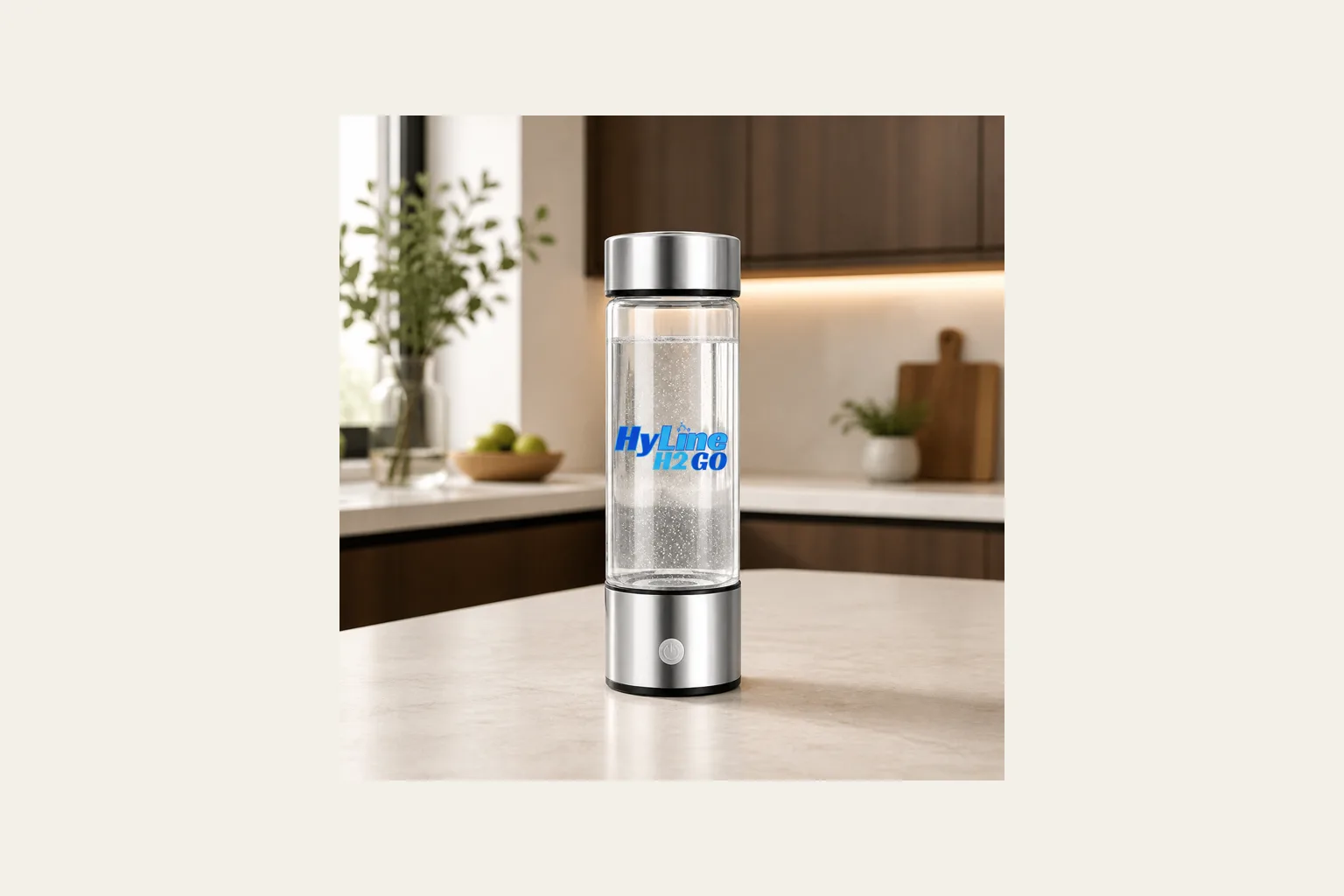
Our recommendation
The $99.95 HyLine H2 GO is a reasonable shortlist for someone who specifically wants a rechargeable, 420 mL hydrogen-water bottle and accepts a three-minute cycle. It is not a water filter, a substitute for the Hybrid H2 or a proven treatment for health conditions. Buy it for portability and the documented appliance routine, not the broad wellness claims on the sales page.
The decision at a glance
A portable routine, not a treatment system
What it does
- Fill 420 mL bottle→
- Run 3-minute cycle→
- Drink and recharge
What it does not establish
- Contaminant reduction→
- Guaranteed output in every water→
- A medical result
| If this sounds like you | Best next move | What decides it |
|---|---|---|
| You want one portable serving at a time | Shortlist the H2 GO | The 420 mL glass bottle and USB charging match that routine. |
| You need filtration or contaminant reduction | Choose a documented filter first | The bottle page does not establish those treatment claims. |
| You need repeated household output | Compare the Hybrid H2 | A single bottle creates a fill-and-cycle routine. |
In this guide
- HyLine H2 GO: our verdict
- What the three-minute routine feels like
- What 1,300+ ppb does—and does not—tell you
- Glass, charging and travel
- Who should buy it—and who should not
- Questions to answer before checkout
- Water choice matters before the cycle starts
- How to judge value without a health promise
- Cleaning and storage questions
- Better alternatives for three different goals
- Frequently asked questions
- Sources & editorial notes
HyLine H2 GO: our verdict
H2 GO is simpler and far cheaper than a countertop ionizer. HyLine lists a 420 mL borosilicate-glass bottle, SPE/PEM electrodes, rechargeable USB power, a three-minute cycle and a claimed hydrogen concentration above 1,300 parts per billion. The package includes a charging cable, gift box and manual.
The weak point is the marketing around energy, inflammation, metabolism, sleep and skin. Those are health claims, not basic product specifications. We would not use them to justify the purchase without reliable claim-specific clinical evidence. The clearer value proposition is portable hydrogen-water generation in a reusable bottle.
What the three-minute routine feels like
A 420 mL capacity is roughly one modest bottle. Fill it with suitable drinking water, run the stated three-minute cycle, drink it and repeat when needed. That is convenient for a desk or gym bag, but less suitable for serving a family or filling cookware.
The buyer should confirm permitted water types, fill level, cleaning method and whether the bottle can operate while charging. Those details belong in the current manual; do not improvise around the electrode base.
What 1,300+ ppb does—and does not—tell you
The concentration claim describes dissolved molecular hydrogen under the seller’s test conditions. It does not tell you the concentration after the water sits open, which water was used, how the number was measured or what result an individual will experience.
If the output number is important, ask HyLine for the test method, water conditions and timing. Do not treat bubbles, taste or a low-cost meter as proof of the advertised concentration.
Glass, charging and travel
Borosilicate glass avoids a plastic drinking chamber and makes the contents visible, but glass adds breakage risk. A travel buyer should ask about the protective case, replacement bottle availability, base water resistance and whether airline or checked-bag rules affect the rechargeable battery.
The product is portable rather than maintenance-free. Cleaning, drying and charging become part of the routine. A bottle that stays in a cupboard because the cycle feels inconvenient has poor value even at $99.95.
Who should buy it—and who should not
Buy it if a single portable serving, three-minute cycle and rechargeable glass format are exactly what you want. It can also be a low-cost way to learn whether you enjoy the routine before considering a much more expensive kitchen ionizer.
Skip it if the real need is safer water, certified contaminant reduction, high household volume or a medical outcome. It should start with potable water; it does not make unknown water safe.
Questions to answer before checkout
Confirm the current warranty for this accessory, the return status after water exposure, replacement-part availability and the exact cleaning procedure. HyLine’s main warranty page gives auxiliary and support products shorter coverage than ionizer machines, so do not assume the bottle receives the five-year machine warranty.
- Which water types are permitted?
- How is output concentration tested?
- How should the electrode base be cleaned?
- What battery and charging limits apply?
- Can the glass bottle or seal be replaced separately?
Water choice matters before the cycle starts
The H2 GO is not presented as a purifier. Begin with potable water that is appropriate for the bottle and follow HyLine’s current instructions on temperature, mineral content and prohibited liquids. Do not put juice, flavored drinks, carbonated beverages or unknown water into the electrode base unless the manual explicitly permits it.
The product page does not explain how different water chemistry affects the claimed hydrogen output. If a buyer plans to use reverse-osmosis water, mineral water or water from the Hybrid H2, ask HyLine which sources were used for the 1,300+ ppb claim and which are recommended for routine operation.
How to judge value without a health promise
At $99.95, the relevant comparison is with other portable hydrogen bottles, not with ordinary reusable bottles alone. Compare chamber material, electrode technology, cycle time, published output method, replacement seals, warranty, battery serviceability and support. A lower price is not a saving if the glass or charging base cannot be replaced.
Set a personal use test before buying: for example, one bottle at work every weekday for three months. If that routine is not appealing, the product has little value regardless of the marketing around antioxidant potential.
Cleaning and storage questions
A glass drinking chamber can show residue, but the electrolysis base may have areas that are harder to inspect. Ask for the exact descaling and rinsing steps, which cleaners are prohibited, and whether the base may be submerged. Let the bottle dry as directed when it will not be used.
Hydrogen-water bottles can be damaged by mineral buildup, impact or incorrect charging. Keep the manual and purchase record, and stop using the device if the glass, seal, electrode area or battery shows damage.
Better alternatives for three different goals
For ordinary portable water, an insulated reusable bottle is simpler and cheaper. For verified contaminant reduction, use a certified filter that matches the water result. For repeated on-demand ionized water at home, compare the full Hybrid H2 with other kitchen ionizers.
The H2 GO belongs between those categories: a small rechargeable appliance for a person who specifically wants freshly generated hydrogen water away from the sink. Keeping that narrow position makes the buying decision much clearer.
Frequently asked questions
Is the HyLine H2 GO worth considering?
The $99.95 HyLine H2 GO is a reasonable shortlist for someone who specifically wants a rechargeable, 420 mL hydrogen-water bottle and accepts a three-minute cycle. It is not a water filter, a substitute for the Hybrid H2 or a proven treatment for health conditions. Buy it for portability and the documented appliance routine, not the broad wellness claims on the sales page.
Who is the HyLine H2 GO best for?
You want one portable serving at a time. Shortlist the H2 GO. The 420 mL glass bottle and USB charging match that routine.
What should I check before buying the HyLine H2 GO?
Ask HyLine for the current H2 GO manual, warranty and output test method, then decide whether a 420 mL three-minute cycle fits your routine.
Put this guide to work
Compare the complete ownership cost
Use the free tool, then download a record you can keep. No email required.
Open the tool →Get the editable pack →Sources & editorial notes
Research-only product review based on HyLine’s current product page and written policies. We did not measure hydrogen output, battery life or durability.
- HyLine: H2 GO product page and specifications
- HyLine: limited warranty terms
- HyLine: returns and refunds policy
Product details can change. Confirm the exact model and current terms before ordering. How we write and update guides.